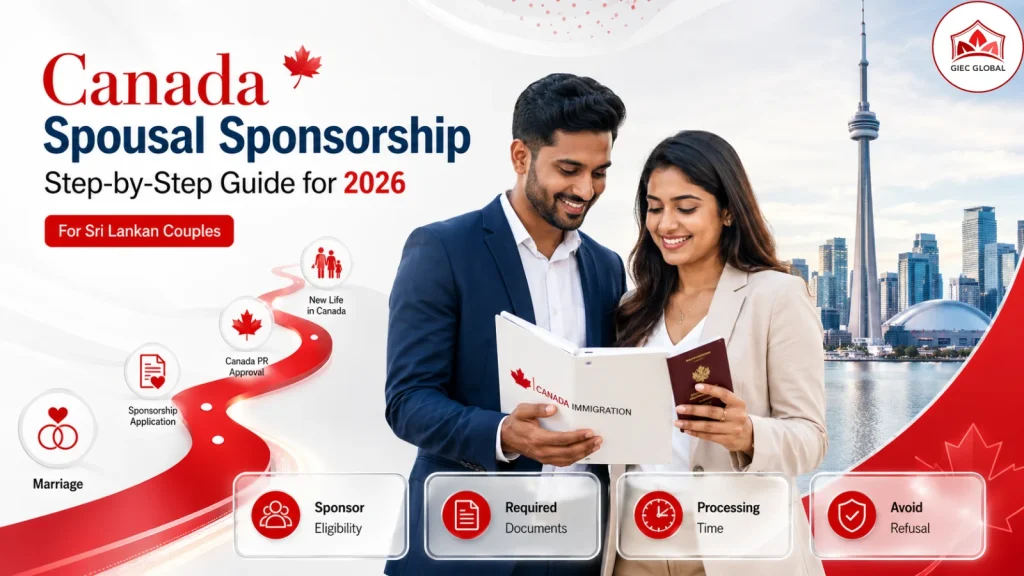
Canada Spousal Sponsorship from Sri Lanka: Step-by-Step Guide for 2026
Living apart from your spouse can be emotionally challenging, but Canada’s family sponsorship program makes it possible for couples to reunite and build a future together. If you’re planning to bring your husband or wife from Sri Lanka, understanding the canada spousal sponsorship process is the first step toward achieving permanent residence.
This guide explains everything you need to know about the canada spousal visa, including spouse visa canada requirements, eligibility, required documents, processing steps, and the latest updates for 2026. Whether you’re starting your canada pr application or exploring the canada immigration process for the first time, having accurate information can help you avoid delays and improve your chances of success.
If you’re wondering about canada pr eligibility, how to canada pr apply, or looking for trusted canada immigration services, this guide will walk you through each stage in a simple and practical way. We’ll also explain the role of Immigration, Refugees and Citizenship Canada (IRCC) in processing applications and what applicants from Sri Lanka should expect throughout the canada pr visa process.
For applicants who need professional guidance, Giecglobal Education and Migration- Sri Lanka provides expert support to help families complete their applications correctly and confidently. Whether your goal is to apply for permanent residency Canada or simply understand the best way to begin your journey, this guide will help you take the next step toward starting your new life in Canada.
Who Can Sponsor a Spouse for Canada PR? Eligibility Rules for Sri Lankans
Not everyone is eligible to sponsor their husband or wife. Before submitting an application, the sponsor must meet certain conditions set by the Canadian government. Understanding these requirements can help avoid delays or refusals.
Basic Eligibility Requirements
To sponsor your spouse, you must:
Be at least 18 years old.
Be a Canadian citizen or a permanent resident.
Be able to prove that your relationship is genuine.
Not be receiving social assistance for reasons other than a disability.
Be willing to financially support your spouse after they arrive.
Who Can Be Sponsored?
You may be able to sponsor:
Your legally married spouse.
Your common-law partner if you have lived together for at least 12 consecutive months.
Your conjugal partner in exceptional situations where living together or getting married was not possible due to legal or personal barriers.
Important Things to Remember
When reviewing an application, immigration officers will carefully check:
Marriage certificates or legal documents.
Photos and communication records.
Joint financial or residential documents.
Travel history and family records.
Any other evidence showing the relationship is genuine.
Providing complete and accurate information from the beginning can make the process much smoother.
Outland vs Inland Spousal Sponsorship
There are two main ways to submit a sponsorship application, depending on where the sponsored spouse is living. Choosing the right option depends on your personal situation and future plans.
Outland Sponsorship
This option is generally used when the sponsored spouse lives outside Canada.
Best for:
Couples living separately.
Applicants staying in Sri Lanka.
Those who may need to travel while the application is being processed.
Advantages:
Suitable for applicants outside Canada.
Travel is generally more flexible.
Appeals may be available if an application is refused.
Inland Sponsorship
This option is for couples who are already living together in Canada while the application is being processed.
Best for:
Spouses already staying in Canada with valid temporary status.
Couples who plan to remain together throughout the process.
Advantages:
Couples can stay together during processing.
The sponsored spouse may be eligible to apply for an open work permit if they qualify.
Which Option Should You Choose?
For most couples living in Sri Lanka, the outland route is usually the more practical choice because the applicant is outside Canada. However, if both partners are already living together in Canada, the inland option may be more suitable.
Documents Sri Lankans Must Submit for Canada Spouse Sponsorship
Preparing the right documents is one of the most important parts of the canada spousal sponsorship and canada spousal visa application. Missing or incorrect paperwork can delay your canada pr application or even lead to refusal.
Essential Documents
Most applicants from Sri Lanka will need:
Valid passports for both spouses.
Marriage certificate.
Marriage certificate attestation (if required).
Birth certificates.
Police clearance certificates.
Medical examination results.
Passport-sized photographs.
Proof of a genuine relationship, such as photos, chat history, travel records, and joint financial documents.
Identity and civil status documents.
Supporting Relationship Evidence
To meet spouse visa canada requirements, applicants should include evidence that shows the relationship is genuine, such as:
Wedding photographs.
Joint bank accounts or property documents.
Flight tickets and travel history.
Communication records.
Affidavits from family or friends, if applicable.
Before You Submit
Before you canada pr apply, double-check that every document is complete, translated into English or French if required, and uploaded in the correct format. A well-prepared application helps make the canada immigration process smoother and reduces unnecessary delays.
Processing Times, Fees, and What to Expect at Each Stage
After submitting your canada pr application, it moves through several stages before a final decision is made. While processing times can vary, knowing what happens next can help you prepare with confidence.
Typical Stages
Your application generally follows these steps:
Application submission.
Sponsor eligibility review.
Biometrics request (if required).
Medical examination.
Background and security checks.
Final decision.
Confirmation of permanent residence.
Government Fees
Applicants usually need to pay fees for:
Sponsorship application.
Permanent residence application.
Biometrics (if applicable).
Right of Permanent Residence Fee.
Always check the latest fees through Immigration, Refugees and Citizenship Canada before submitting your application.
How Long Does It Take?
Processing times depend on:
Application completeness.
Verification of documents.
Medical and background checks.
Overall application volume.
Submitting accurate information the first time can help avoid unnecessary delays in the canada pr visa process.
Common Reasons Canada Spousal Sponsorship Gets Refused for Sri Lankans
Applying for a canada spousal sponsorship or canada spousal visa can be a straightforward process if your application is complete and accurate. However, many applications are refused because of avoidable mistakes. Understanding these common reasons can improve your chances of success and help you move through the canada immigration process with confidence.
1. Insufficient Proof of a Genuine Relationship
One of the most common reasons for refusal is failing to prove that the relationship is genuine. Applicants should provide strong evidence such as:
Wedding photos.
Travel records.
Chat and call history.
Joint financial documents.
Family photographs and supporting documents.
These documents help satisfy the spouse visa canada requirements.
2. Missing or Incorrect Documents
Incomplete paperwork can delay or negatively affect your canada pr application. Double-check that all required documents are submitted, translated if necessary, and match the information provided in your forms.
3. Incorrect or Inconsistent Information
Any differences in names, dates, employment history, addresses, or relationship details may raise concerns during the canada pr process. Always review your application carefully before you canada pr apply.
4. Failure to Meet Eligibility Requirements
Both the sponsor and the applicant must meet the required conditions. If either person does not meet canada pr eligibility or canada permanent resident eligibility requirements, the application may be refused.
5. Medical or Security Concerns
Applicants may be refused if they do not complete the required medical examination or if background and security checks reveal issues that affect admissibility.
Tips to Improve Your Chances
Before submitting your canada pr visa application:
Review every form carefully.
Submit complete supporting documents.
Keep copies of all records.
Respond quickly to any requests from Immigration, Refugees and Citizenship Canada.
Follow the latest instructions throughout the canada pr visa process.
If you need immigration help Canada, a qualified canada pr consultant can review your application before submission and help you avoid common mistakes. Many applicants also seek advice from immigration lawyers in Canada or the best canada immigration consultants to ensure everything is prepared correctly.
Whether you’re planning to apply for permanent residency Canada, researching ways to get pr in Canada, or simply thinking, “I want to immigrate to Canada,” professional guidance can make the process much easier.
Giecglobal Education and Migration- Sri Lanka provides reliable canada immigration services to help applicants prepare accurate applications and navigate every stage of the process. For official updates, application status, or immigration Canada contact details, always refer to Immigration, Refugees and Citizenship Canada.
FAQs
1. Who can sponsor a spouse from Sri Lanka?
A Canadian citizen or permanent resident who meets the eligibility requirements can sponsor their spouse, common-law partner, or eligible conjugal partner.
2. How long does the application take?
Processing times vary depending on the application type, document verification, and overall application volume.
3. What documents are required?
Common documents include passports, marriage certificates, police clearance certificates, medical reports, photographs, and proof of a genuine relationship.
4. Can I work while my application is being processed?
In some cases, applicants already living in Canada may be eligible to apply for an open work permit.
5. Can my application be refused?
Yes. Applications may be refused if documents are missing, information is inaccurate, or the relationship cannot be proven as genuine.
6. Do all documents need to be translated?
Yes. Any document that is not in English or French must be accompanied by a certified translation.
7. Is an interview always required?
No. Most applications are processed without an interview, but one may be requested if additional verification is needed.
8. Should I use an immigration consultant?
While it isn’t mandatory, professional guidance can help you prepare a complete application and reduce the chances of avoidable mistakes.