
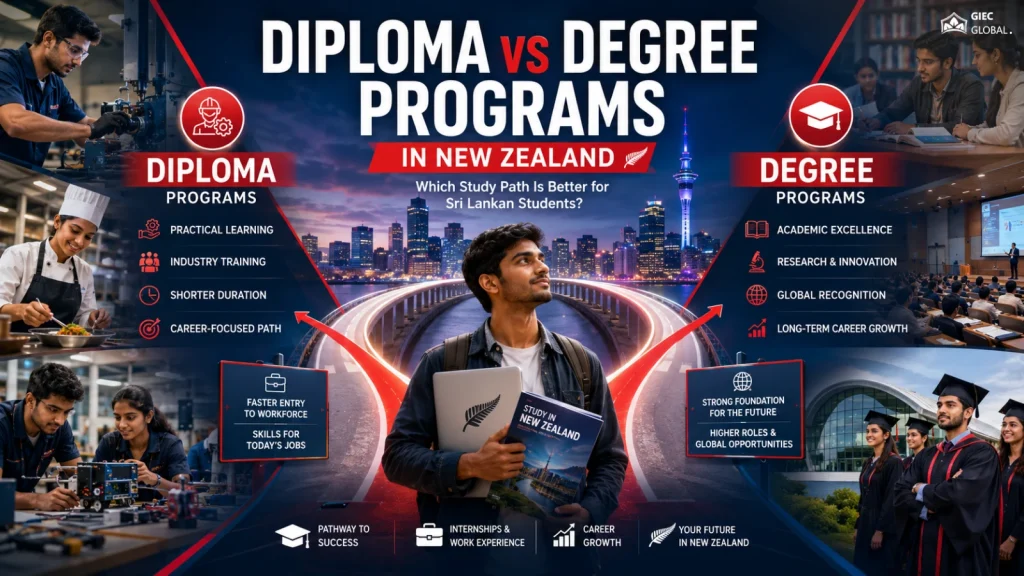
Introduction: Diploma vs Degree Programs to Study in New Zealand for Sri Lankan Students
Choosing between diploma and degree programs is one of the most important decisions for Sri Lankan students planning to study abroad. Study in New Zealand has become a popular choice because of its globally recognized education system, affordable tuition options, excellent lifestyle, and strong career opportunities for international students. Whether students want a faster career-focused qualification or a complete academic pathway, there are many programs for study available across New Zealand universities and institutes.
Many Sri Lankan students prefer to study in New Zealand because the country offers high-quality education along with part-time work rights and post-study career opportunities. However, understanding the difference between diploma and degree programs is essential before selecting the right course. Diploma programs usually focus on practical skills and shorter study durations, while degree programs provide deeper academic knowledge and wider career opportunities.
Another important part of the process is obtaining a New Zealand study visa. Students must prepare proper documents, meet financial requirements, and complete the study visa apply process carefully to improve approval chances. This is why many students seek guidance from professional New Zealand study visa consultants who understand the latest immigration and education requirements.
With expert immigration consultants, Sri Lankan students can receive professional support for university selection, documentation, and visa application preparation. Proper guidance can help students avoid common mistakes during the New Zealand study visa process and improve the chances of getting visa approval smoothly without unnecessary complications.
Why New Zealand Is a Popular Study Destination for Sri Lankan Students
High-Quality Education System
- Globally recognized universities and institutions
- Industry-focused courses with practical learning
- Strong academic standards and modern teaching methods
Affordable Education and Living Costs
- Lower tuition fees compared to many Western countries
- Flexible accommodation options for international students
- Student discounts and affordable public transport
Safe and Peaceful Environment
- Friendly and welcoming multicultural society
- Low crime rates and good quality of life
- Comfortable environment for international students
Part-Time Work Opportunities
- Permission to work while studying
- Opportunities to gain international work experience
- Helps students manage living expenses
Post-Study Career Opportunities
- Pathways for employment after graduation
- Growing demand for skilled professionals
- Opportunity to gain international career exposure
Beautiful Lifestyle and Environment
- Clean cities and stunning natural landscapes
- Balanced student lifestyle with outdoor activities
- Modern infrastructure and public facilities
Easy Communication and Student Support
- English-speaking country with strong student support services
- Guidance available for accommodation, academics, and wellbeing
- International student communities across major cities
Opportunities for Long-Term Growth
- Chance to build global networks and professional connections
- Valuable international qualifications for future careers
- Exposure to diverse cultures and experiences
Understanding Diploma Programs in New Zealand
What Are Diploma Programs?
- Diploma courses are career-focused qualifications designed to provide practical skills and industry knowledge
- Popular among Sri Lankan students who want faster entry into the workforce
- Available in fields like business, IT, hospitality, healthcare, engineering, and design
Duration of Diploma Courses
- Most diploma courses in New Zealand take 1 to 2 years to complete
- Shorter study duration compared to traditional degree programs
- Ideal for students looking for affordable programs for study abroad
Practical Learning Approach
- Strong focus on hands-on training and real-world industry experience
- Internship and work-placement opportunities in many courses
- Helps students develop job-ready skills quickly
Entry Requirements for Diploma Programs
- Flexible academic requirements for international students
- English language proficiency tests may be required
- Easier pathway for many Sri Lankan students planning to study in New Zealand
Cost of Diploma Programs
- Generally more affordable than degree courses
- Lower tuition fees and shorter study periods reduce overall expenses
- Suitable option for budget-conscious international students
Career Opportunities After Diploma Studies
- Graduates can apply for entry-level and skilled jobs
- Some diploma programs offer pathways to higher education and degree studies
- Industry-focused learning improves employability after graduation
Visa and Application Process
- Students must apply for a New Zealand study visa before starting their course
- Proper documentation and financial proof are important during the study visa apply process
- Many students seek support from New Zealand study visa consultants for smoother application guidance
Why Diploma Programs Are Popular
- Faster completion time with practical career benefits
- Affordable pathway to international education
- Attractive option for Sri Lankan students looking to gain global qualifications and work experience while planning to study in New Zealand
Understanding Degree Programs in New Zealand
What Are Degree Programs?
- Degree programs are academic qualifications offered by universities and higher education institutions
- Focus on theoretical knowledge, research, and professional development
- Suitable for students aiming for long-term career growth and advanced education
Duration of Degree Courses
- Most undergraduate degree programs take 3 to 4 years to complete
- Some specialized courses may require additional study time
- Provides deeper subject knowledge and broader academic exposure
Academic and Research-Focused Learning
- Strong emphasis on critical thinking, analysis, and problem-solving
- Includes assignments, presentations, projects, and research work
- Helps students build professional and leadership skills
Popular Fields of Study
- Business and management
- Engineering and technology
- Health sciences and nursing
- Computer science and information technology
- Arts, education, and social sciences
Global Recognition of Qualifications
- Degrees from New Zealand institutions are recognized internationally
- Graduates can pursue career opportunities in different countries
- Strong reputation for quality education and modern learning systems
Career Opportunities After Graduation
- Access to wider career options and higher-paying roles
- Better opportunities for professional growth and specialization
- Preferred qualification for many managerial and advanced positions
Student Experience and Campus Life
- Modern campuses with advanced learning facilities
- Opportunities to join clubs, events, and cultural activities
- Diverse international student communities and networking opportunities
Pathways for Further Education
- Graduates can continue with postgraduate studies or research programs
- Opens opportunities for master’s degrees and professional certifications
- Helpful for students planning long-term academic and career development
Key Differences Between Diploma and Degree Courses
Course Duration
- Diploma programs usually take 1 to 2 years to complete
- Degree programs generally require 3 to 4 years of study
- Many Sri Lankan students choose diploma courses for faster career entry while planning to study in New Zealand
Learning Style
- Diploma courses focus more on practical and industry-based training
- Degree programs emphasize academic knowledge, research, and theory
- Both types of programs for study offer valuable career opportunities depending on student goals
Tuition Fees and Overall Costs
- Diploma programs are often more affordable
- Degree courses may involve higher tuition and living expenses due to longer study duration
- Budget-conscious Sri Lankan students often compare costs before selecting a course
Career Opportunities
- Diplomas prepare students for entry-level and technical job roles
- Degrees can lead to professional, managerial, and advanced career positions
- Career goals play an important role when choosing between these programs for study
Entry Requirements
- Diploma programs may have more flexible admission criteria
- Degree courses often require stronger academic qualifications
- English language requirements apply to both study options
Pathways for Higher Education
- Diploma graduates can sometimes transfer into degree programs
- Degree qualifications also provide access to postgraduate studies
- Students planning long-term education pathways should evaluate future opportunities carefully
Study Visa Requirements
- Both diploma and degree students need a New Zealand study visa before traveling
- Proper documentation is essential during the study visa apply process
- Many students seek guidance from New Zealand study visa consultants to improve application accuracy and avoid delays
Which Option Is Better?
- Diploma programs are suitable for skill-based and faster employment pathways
- Degree programs are ideal for broader academic and professional growth
- The right choice depends on budget, career goals, and future plans to study in New Zealand for Sri Lankan students
Which Option Is Better for Sri Lankan Students?
Choose a Diploma Program If
- You want a shorter and more affordable study pathway
- Your goal is to gain practical skills quickly
- You prefer industry-focused learning and faster job opportunities
- You want to enter the workforce in a shorter time period
Choose a Degree Program If
- You are looking for long-term academic and career growth
- You want broader subject knowledge and professional qualifications
- Your career goal requires advanced education or specialization
- You plan to continue with postgraduate studies in the future
Consider Your Budget
- Diploma programs usually involve lower tuition fees and living costs
- Degree courses may require a larger financial investment due to longer study duration
- Students should compare total expenses before making a final decision
Think About Career Goals
- Practical job-oriented careers may align better with diploma qualifications
- Professional and leadership roles may benefit more from degree-level education
- Understanding future career plans can make the decision easier
Evaluate Learning Preferences
- Diplomas focus more on hands-on training and applied learning
- Degrees involve more research, assignments, and academic study
- Students should choose the style of learning they are most comfortable with
Look at Future Opportunities
- Some students start with a diploma and later continue into a degree pathway
- Degree qualifications may open more opportunities for advanced education
- Both options can lead to valuable international career experiences
Final Decision Depends on Personal Goals
- There is no single “best” option for every student
- The right choice depends on academic background, financial situation, career plans, and personal interests
- Careful research and proper planning can help students choose the most suitable study pathway for their future
Final Thoughts on Choosing the Right Program in New Zealand
Choosing the Right Study Path
- Both diploma and degree options offer valuable opportunities for Sri Lankan students
- The best choice depends on career goals, budget, academic interests, and future plans
- Students should compare different programs for study carefully before making a final decision
Importance of Career Planning
- Diploma programs are ideal for skill-based and practical career pathways
- Degree programs are better for long-term professional growth and advanced education
- Understanding personal career objectives can help students confidently study in New Zealand with the right direction
Financial and Lifestyle Considerations
- Tuition fees, living costs, and course duration should all be considered
- Students should choose a study option that matches their financial capacity and lifestyle preferences
- Proper planning helps reduce stress during the international education journey
Role of Professional Guidance
- Applying for a New Zealand study visa requires accurate documentation and preparation
- The study visa apply process can become easier with expert support and proper guidance
- Many Sri Lankan students consult experienced New Zealand study visa consultants to improve their chances of successful visa approval
Building a Successful Future
- New Zealand offers globally recognized education, international exposure, and career opportunities
- Both diploma and degree pathways can help students build a strong future and gain valuable global experience
- With the right planning and course selection, Sri Lankan students can successfully achieve their goals to study in New Zealand
FAQs
1. What is the main difference between diploma and degree programs in New Zealand?
Diploma programs focus more on practical and job-oriented training, while degree programs provide deeper academic knowledge and broader career opportunities.
2. Which option is more affordable for Sri Lankan students?
Diploma programs are generally more affordable because they have lower tuition fees and shorter study durations compared to degree courses.
3. Can diploma students continue to a degree program later?
Yes, many institutions offer pathway options where students can transfer credits from a diploma program into a related degree course.
4. Is New Zealand a good study destination for international students?
Yes, New Zealand is known for its high-quality education system, safe environment, multicultural lifestyle, and strong career opportunities for international students.
5. Do students need a visa to study in New Zealand?
Yes, international students must obtain a valid student visa before starting their studies in New Zealand.
6. Which course is better for long-term career growth?
Degree programs are usually better for long-term professional growth and advanced career opportunities, while diploma programs are ideal for faster entry into the workforce.