
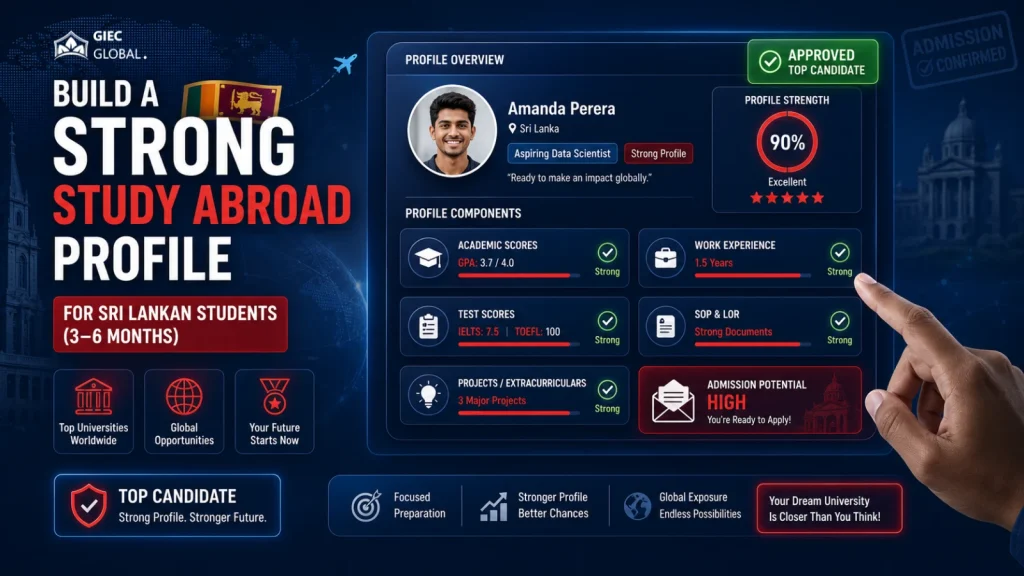
Build a Strong Profile for Study Abroad from Sri Lanka in 3–6 Months
Building a strong study abroad profile in just 3–6 months may seem challenging, but with the right strategy, it is completely achievable. Many students in Sri Lanka think creating a competitive profile for study abroad takes years, but universities today focus more on quality, clarity, and relevant experience rather than just long-term preparation.
The demand for study abroad is growing, and so is the competition. Universities are not only looking at academic scores—they want students who show skills, practical exposure, and clear career goals. A strong study abroad profile should highlight your academics, projects, internships, and extracurricular activities in a focused and meaningful way.
If you are starting late or unsure where to begin, working with experienced study abroad consultants or abroad education consultants can save you time and effort. With the right guidance, you can focus on high-impact activities that improve your profile quickly instead of wasting time on less important tasks.
The key is to follow a clear plan. In a 3–6 month timeline, every step matters—from improving your academics and preparing for exams to gaining relevant experience and building strong application documents. A targeted approach based on your chosen course helps you stand out.
As trusted abroad education consultants, we guide students at every step—from profile building to application and helping secure a study visa within deadlines. With the right direction and consistent effort, you can build a strong study abroad profile and move closer to your goal faster than expected.
What Universities Look for in A Strong Study Abroad Profile
Universities evaluate applicants beyond just marks. They aim to select students who are capable, motivated, and aligned with their programs. Here are the key factors they consider:
Academic Performance
- Consistent grades over time, not just one strong year
- Performance in relevant subjects related to your chosen course
- Improvement trends, if earlier scores were lower
Clarity of Goals
- A clear reason for choosing the course and country
- Defined short-term and long-term career plans
- Alignment between past education and future goals
English Language Proficiency
- Strong performance in tests like IELTS, TOEFL, or equivalent
- Ability to communicate ideas clearly in speaking and writing
- Confidence in understanding academic content in English
Practical Experience
- Internships, part-time work, or volunteering experience
- Hands-on exposure related to your field of interest
- Real-world understanding beyond classroom learning
Skills and Projects
- Relevant technical or soft skills
- Personal or academic projects that show initiative
- Certifications or short courses that add value
Extracurricular Activities
- Participation in clubs, events, or competitions
- Leadership roles or team involvement
- Activities that reflect personality and interests
Strong Application Documents
- A well-written Statement of Purpose (SOP)
- Clear and professional Letters of Recommendation (LORs)
- A structured and updated resume or CV
Consistency and Overall Profile Strength
- A balanced profile without major gaps or inconsistencies
- Logical connection between academics, experience, and goals
- A genuine and authentic presentation of achievements
Set Clear Goals: Choose the Right Course and Country
Choosing the right direction is the foundation of a strong study abroad profile. Without clear goals, students often select courses or countries based on trends rather than long-term value. This can weaken your profile for study abroad and reduce your chances of admission.
Define Your Career Goals
- Identify what you want to achieve after completing your study abroad program
- Decide whether your focus is on job opportunities, skill development, or research
- Make sure your chosen course aligns with your long-term career plans
Choose the Right Course
- Select a course that matches your academic background and interests
- Avoid random or unrelated course choices just to go abroad
- Focus on programs that offer practical learning and industry exposure
Select the Right Country
- Compare countries based on education quality, job opportunities, and visa policies
- Consider factors like cost of living, part-time work options, and post-study work rights
- Choose a country where your profile has higher chances of acceptance
Align Your Profile with Your Choices
- Ensure your academics, skills, and experience support your selected course
- Build relevant projects or gain experience related to your field
- Maintain consistency across your entire study abroad profile
Take Expert Guidance
- Connect with experienced study abroad consultants to avoid wrong decisions
- Get help in shortlisting the best course and country based on your profile
- Work with trusted abroad education consultants to create a clear and effective roadmap
Improve Your Academic Profile in a Short Time
Improving your academic profile in a limited timeframe is all about focusing on high-impact actions. Even small, consistent improvements can make a noticeable difference when presented correctly.
Focus on Key Subjects
- Identify subjects that are most relevant to your chosen course
- Work on improving scores in these areas first
- Prioritize understanding concepts instead of rote learning
Enroll in Short-Term Courses
- Take online or offline certification courses related to your field
- Choose courses that add practical knowledge, not just theory
- Platforms offering industry-relevant skills can boost your profile quickly
Strengthen Academic Projects
- Improve existing projects by adding more depth or real-world application
- Work on new mini-projects that showcase your skills
- Focus on quality over quantity
Improve Study Strategy
- Create a simple daily or weekly study plan
- Use active learning methods like notes, quizzes, and revisions
- Track your progress regularly to stay consistent
Get Academic Guidance
- Seek help from teachers, mentors, or tutors for difficult subjects
- Clarify doubts quickly to avoid gaps in understanding
- Feedback can help you improve faster
Highlight Improvement Trends
- Show progress in your academic performance over time
- Even small improvements reflect effort and consistency
- Keep records of your achievements and updated results
Participate in Academic Activities
- Join seminars, workshops, or academic competitions
- Engage in activities that strengthen subject knowledge
- These add extra value beyond classroom learning
Prepare for IELTS, TOEFL, or Other Required Exams
Language test scores play a crucial role in strengthening your study abroad profile and meeting university admission requirements. A good score not only improves your chances of acceptance but also reflects your ability to succeed in an international academic environment.
Understand the Exam Requirements
- Check which test is accepted for your target universities (IELTS, TOEFL, or others)
- Know the minimum score required for your chosen course and country
- Set a realistic target score to strengthen your profile for study abroad
Create a Smart Preparation Plan
- Allocate daily time for reading, writing, listening, and speaking
- Focus more on weaker sections to improve overall performance
- Follow a structured timeline to stay consistent
Use the Right Study Resources
- Practice with official materials and mock tests
- Use online platforms, apps, or coaching if needed
- Regular practice helps improve accuracy and speed
Take Mock Tests Regularly
- Attempt full-length tests to understand the exam pattern
- Analyze your mistakes and work on them
- Track your progress to stay on target
Improve Practical English Skills
- Read articles, watch English content, and practice speaking daily
- Focus on clarity, vocabulary, and sentence structure
- Strong communication skills support your overall study abroad journey
Get Expert Support
- Work with experienced study abroad consultants for proper guidance
- Get help in selecting the right exam date and preparation strategy
- Abroad education consultants can guide you on required scores based on your target universities
Plan Your Exam Timing
- Book your test early to avoid last-minute delays
- Keep time for a retake if needed
- Ensure your scores are ready before application deadlines
Build Strong Extracurricular Activities and Projects
Extracurricular activities and projects help you stand out by showing what you can do beyond academics. They reflect your interests, initiative, and ability to apply knowledge in real situations.
Focus on Relevant Activities
- Choose activities that connect with your chosen field
- Avoid random participation just to fill your profile
- Show depth and consistency in what you do
Work on Practical Projects
- Create projects that solve real problems or add value
- Include academic, personal, or group projects
- Focus on quality, learning, and outcomes
Take Initiative
- Start something on your own, like a club, blog, or small project
- Show leadership and responsibility
- Initiative reflects motivation and independent thinking
Participate in Competitions and Events
- Join workshops, hackathons, or subject-related competitions
- These experiences add credibility and exposure
- Even participation shows willingness to learn
Gain Team Experience
- Work in teams to build collaboration skills
- Take on roles where you contribute actively
- Teamwork is an important skill for global education
Highlight Achievements
- Mention awards, recognitions, or key outcomes
- Show measurable results wherever possible
- Keep proof or documentation of your work
Maintain Consistency
- Stay involved in selected activities over time
- Avoid starting too many things without completing them
- Consistency shows commitment and discipline
Gain Relevant Work Experience or Internships
Gaining practical experience is one of the fastest ways to strengthen your study abroad profile. Universities value applicants who understand their field beyond textbooks and can apply knowledge in real-world situations.
Choose Relevant Opportunities
- Look for internships or part-time roles related to your chosen course
- Avoid unrelated work that does not add value to your profile for study abroad
- Even short-term or unpaid roles can be useful if they offer learning
Focus on Skill Development
- Learn industry-relevant tools, techniques, and processes
- Build both technical and soft skills like communication and teamwork
- Practical skills make your study abroad profile more competitive
Start Small if Needed
- Begin with internships, volunteering, or freelance work
- Work with startups, local businesses, or online platforms
- Small experiences can still create strong impact
Document Your Work
- Keep records of tasks, projects, and achievements
- Collect certificates, letters, or proof of experience
- This helps present a strong profile for study abroad during applications
Highlight Your Impact
- Show what you contributed and what you learned
- Mention measurable results if possible
- Focus on outcomes, not just responsibilities
Get Guidance from Experts
- Study abroad consultants can suggest the right type of experience based on your course
- Abroad education consultants help align your work experience with university expectations
- Expert advice ensures your efforts directly improve your study abroad chances
Build Consistency
- Try to gain continuous experience instead of one-time work
- Stay involved in your field to show long-term interest
- Consistency adds strength to your overall study abroad profile
Write a Powerful Statement of Purpose (SOP)
A Statement of Purpose is your chance to tell your story in a clear and meaningful way. It helps universities understand your background, intentions, and how well you fit into their program.
Start with a Clear Introduction
- Briefly explain your interest in the chosen field
- Share what motivated you to pursue this path
- Keep it engaging but professional
Explain Your Academic Background
- Highlight relevant subjects and achievements
- Connect your past studies with your chosen course
- Show how your academic journey led to this decision
Showcase Experience and Skills
- Mention internships, projects, or practical exposure
- Focus on what you learned and how it shaped your goals
- Avoid listing—explain your involvement and impact
Define Your Career Goals
- Clearly explain your short-term and long-term plans
- Show how the course will help you achieve them
- Be specific and realistic
Explain Why This Course and University
- Show that you have researched the program
- Mention specific features like curriculum, faculty, or opportunities
- Connect these with your goals
Keep It Structured and Concise
- Follow a logical flow from introduction to conclusion
- Avoid unnecessary details or repetition
- Keep the content clear and easy to read
Maintain Authenticity
- Write in your own words and be honest
- Avoid copying or using overly complex language
- A genuine and simple SOP creates a stronger impact
Proofread and Refine
- Check for grammar, clarity, and consistency
- Take feedback from mentors or experts
- Revise multiple times to improve quality
Get Strong Letters of Recommendation (LORs)
Letters of Recommendation play an important role in strengthening your study abroad profile. They give universities an external perspective on your abilities, character, and potential, making your profile for study abroad more credible and trustworthy.
Choose the Right Recommenders
- Select teachers, professors, or managers who know you well
- Avoid choosing someone just because of their position
- Strong, detailed recommendations add more value to your study abroad profile
Build Strong Relationships
- Stay in touch with your mentors or supervisors
- Participate actively in classes, projects, or work
- A good relationship leads to more personalized and impactful LORs
Provide the Right Information
- Share your resume, achievements, and goals with your recommender
- Explain your course and why you are applying
- This helps them write a more relevant LOR for your profile for study abroad
Focus on Quality Over Quantity
- Universities usually require 2–3 strong LORs
- A detailed and honest recommendation is better than a generic one
- Quality LORs strengthen your overall study abroad profile
Highlight Key Strengths
- Ensure your LOR reflects your academic ability, skills, and attitude
- Include examples of your performance, projects, or work ethic
- Specific details make your application more convincing
Plan in Advance
- Request LORs early to avoid last-minute delays
- Give recommenders enough time to write properly
- This ensures timely submission for your study abroad applications
Get Guidance if Needed
- Study abroad consultants can guide you on selecting the right recommenders
- Abroad education consultants help ensure your LORs match university expectations
- Expert advice can improve the impact of your application
Final Profile Review and Smart Application Strategy
Before submitting your applications, a final review and a clear strategy can make a big difference. This step ensures everything is aligned, error-free, and positioned in the best possible way.
Review Your Entire Profile
- Check consistency across academics, experience, and goals
- Ensure there are no gaps or mismatched information
- Make sure every section supports your overall story
Refine Application Documents
- Recheck your SOP, LORs, and resume for clarity and accuracy
- Remove errors, repetition, or unnecessary details
- Keep the content simple, structured, and impactful
Shortlist Universities Smartly
- Divide options into safe, moderate, and ambitious categories
- Choose based on your profile strength and acceptance chances
- Avoid applying randomly to too many universities
Align Deadlines and Requirements
- Track application deadlines for each university
- Prepare documents as per specific requirements
- Submit everything on time to avoid last-minute issues
Customize Each Application
- Tailor your SOP and documents for each university
- Highlight points that match their program and expectations
- A personalized approach increases your chances of selection
Plan for Backup Options
- Keep alternative universities or intakes ready
- Prepare for possible delays or rejections
- A backup plan ensures you don’t lose time
Take Expert Feedback
- Get your profile reviewed by mentors or professionals
- Identify weak areas and improve them before applying
- External feedback helps catch mistakes you may miss
FAQs
With a focused plan, you can build a solid profile in 3–6 months.
Academics, clear goals, test scores, experience, and overall profile consistency.
Yes, you can improve your chances with strong test scores, projects, and experience.
They are essential for proving English skills and improving admission chances.
Yes, they show practical skills and help you stand out.
Start at least 6 months before deadlines, but even 3–6 months can be enough with the right approach.