
Introduction: Study Abroad vs Studying in Sri Lanka: Which Is Better for Your Future?
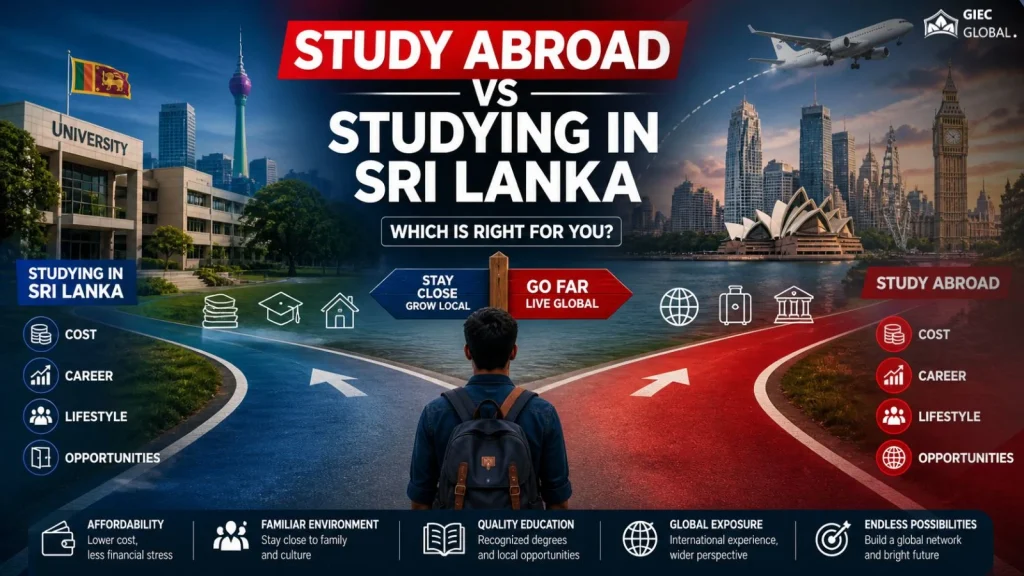
Choosing between study abroad and studying in Sri Lanka is one of the most important decisions a student can make. This choice not only impacts your education but also shapes your career opportunities, global exposure, and personal growth. While studying in Sri Lanka offers a familiar environment, lower costs, and proximity to family, studying abroad provides access to internationally recognized universities, diverse cultures, and broader career pathways.
In today’s competitive world, many students are exploring global education to gain an edge in the job market. However, the process of planning to study abroad can feel overwhelming—from selecting the right country and university to managing applications and documentation. This is where experienced study abroad consultants play a crucial role. They help students make informed decisions, avoid common mistakes, and streamline the entire application journey.
Another major step in this process is obtaining a study abroad visa, which often involves strict requirements and timelines. Without proper guidance, students may face delays or rejections. That’s why working with a reliable visa consultant in Sri Lanka can make a significant difference. The right support ensures that your visa process is handled efficiently, increasing your chances of approval and helping you move closer to your dream of studying overseas.
Ultimately, whether you choose studying in Sri Lanka or going abroad depends on your personal goals, financial situation, and career aspirations. This guide will help you clearly understand both options so you can make the best decision for your future.
Overview of Both Education Options
Local education offers a familiar environment, lower costs, and easier access to support systems.
International education provides global exposure, diverse cultures, and modern learning methods.
One option focuses on stability and affordability, while the other emphasizes growth and opportunities.
The right choice depends on your goals, budget, and willingness to explore beyond your comfort zone.
Local Education Experience
Studying within your home country offers a more familiar and stable academic journey. Students benefit from a known education system, making it easier to adapt and perform well. The cost of tuition and living is generally more affordable, which reduces financial pressure on families. Staying close to home also provides emotional support, making the overall experience more comfortable and less stressful. This path is ideal for students who prefer consistency, lower expenses, and a straightforward process without too many external challenges.
International Education Experience
Pursuing education in another country provides a broader and more dynamic learning environment. Students are exposed to new cultures, modern teaching styles, and diverse perspectives. Many international institutions focus on practical learning, critical thinking, and real-world skills, which can improve career readiness. Living independently in a new country also helps students develop confidence, adaptability, and global connections. This option is well-suited for those who are looking for personal growth, global exposure, and long-term career advantages.
Key Differences at a Glance
The main difference lies in comfort versus exposure. Local education offers affordability, familiarity, and ease of access, while international education provides wider opportunities, global networking, and a more competitive edge. However, the second option often requires higher investment, careful planning, and the ability to adjust to a new environment.
What Should You Consider?
Before making a decision, students should evaluate their goals, financial situation, and willingness to step out of their comfort zone. Both options have their own strengths, and the right choice depends on what aligns best with your future plans.
Quality of Education and Global Recognition
When comparing study abroad and studying in Sri Lanka, the quality of education and its global recognition play a major role in decision-making. These factors directly impact your career opportunities, skill development, and how your qualifications are valued worldwide.
Academic Standards and Teaching Approach
In many international universities, the focus is on practical learning, research, and critical thinking. Students are encouraged to participate in discussions, projects, and real-world problem-solving, which helps build strong industry-relevant skills. This is one of the key reasons why many students choose to study abroad, as it prepares them for global careers.
In contrast, studying in Sri Lanka often follows a more traditional and theory-based approach. While there are reputed institutions offering quality education, the emphasis may be more on academic knowledge rather than practical exposure. However, for certain fields, local education still provides a solid foundation.
Global Recognition of Degrees
One of the biggest advantages of choosing to study abroad is the international recognition of degrees. Graduating from globally ranked universities can increase your credibility and open doors to job opportunities across different countries. Employers often value international qualifications due to their exposure to diverse learning environments.
Degrees obtained while studying in Sri Lanka are well-recognized within the country and in some regions, but they may have limited global reach depending on the institution. This can sometimes affect international career mobility.
Role of Expert Guidance
Understanding which universities offer the best value and recognition can be challenging. This is where experienced study abroad consultants can help. They guide students in selecting institutions that are not only reputable but also aligned with their career goals.
Additionally, securing a study abroad visa is a critical step in accessing these globally recognized education systems. Proper guidance ensures that students meet all requirements and avoid unnecessary delays.
Career Opportunities After Graduation
Career outcomes can vary significantly depending on where you complete your education. Here’s a clear breakdown of what to expect from each path:
Local Career Opportunities
- Strong access to job opportunities within the domestic market
- Easier networking with local employers and industry connections
- Better understanding of the local job market and work culture
- Opportunities in government sectors and regional companies
- Lower competition for roles that prioritize local qualifications
International Career Opportunities
- Access to a wider global job market across multiple countries
- Higher chances of working with multinational companies
- Exposure to diverse industries and advanced job roles
- Opportunity to gain international work experience after graduation (in some countries)
- Stronger professional network with global connections
Skill Development and Employability
- Practical skills and real-world experience can improve job readiness
- Exposure to different work environments enhances adaptability
- Communication and interpersonal skills often improve in diverse settings
- Employers may value international exposure for leadership and problem-solving roles
Student Lifestyle and Exposure
The overall lifestyle and level of exposure you experience during your education can significantly influence your personal growth, confidence, and future opportunities. When comparing study abroad and studying in Sri Lanka, the difference in day-to-day life and cultural exposure becomes very clear.
Lifestyle While Studying Locally
Students who choose studying in Sri Lanka often enjoy a more comfortable and familiar lifestyle. Being close to family, friends, and local culture creates a sense of stability and emotional support. Daily life is easier to manage, with fewer adjustments required in terms of food, language, and social environment. This allows students to focus more on academics without facing major lifestyle changes.
Lifestyle While Studying Abroad
Choosing to study abroad introduces students to a completely new way of life. From adapting to a different culture and language to managing daily responsibilities independently, the experience helps build confidence and self-reliance. Students get the chance to interact with people from different backgrounds, explore new cultures, and develop a global mindset. This level of exposure is often seen as a major advantage in both personal and professional growth.
Cultural and Social Exposure
One of the biggest benefits of study abroad is the opportunity to gain international exposure. Students participate in multicultural events, build global friendships, and learn to adapt to diverse environments. This not only enhances communication skills but also broadens perspectives.
On the other hand, studying in Sri Lanka offers a deeper connection to local traditions and culture. While the exposure may be more limited compared to international experiences, it still provides a strong sense of identity and community.
Support and Guidance
Adjusting to a new lifestyle abroad can be challenging, especially in the beginning. This is where study abroad consultants can guide students by preparing them for cultural differences and helping them settle smoothly. They also assist with important processes like securing a study abroad visa, ensuring students can focus on their journey without unnecessary stress.
Visa, Work Rights, and Immigration Benefits
Understanding visa rules, work permissions, and long-term immigration options is essential when choosing where to study. These factors can directly impact your ability to gain work experience, manage expenses, and plan your future after graduation.
Student Visa Process
- Applying to study in another country usually involves a detailed visa process with strict documentation, financial proof, and timelines
- Approval depends on meeting eligibility criteria set by the destination country
- The process can take time and requires careful planning to avoid delays
- Studying locally does not involve visa requirements, making the admission process simpler and faster
Work Rights During Studies
- Many countries allow students to work part-time while studying
- This helps cover living expenses and gain practical work experience
- Work hour limits and rules vary depending on the country
- Local students may also work part-time, but opportunities and regulations depend on the local job market
Post-Study Work Opportunities
- Some countries offer post-study work permits, allowing graduates to stay and gain full-time work experience
- This can be a major advantage for building an international career and recovering education costs
- Students who study locally typically enter the workforce immediately after graduation within the domestic job market
Immigration and Long-Term Benefits
- Certain countries provide pathways to long-term residency based on education and work experience
- This can open opportunities for settling abroad and accessing global career options
- Local education does not usually offer international migration benefits but provides stability within the home country
Challenges of Studying Abroad vs Staying Local
While both options offer valuable benefits, it’s equally important to understand the challenges involved before making a decision. Whether you choose to study abroad or continue studying in Sri Lanka, each path comes with its own set of difficulties that can impact your overall experience.
Challenges of Studying Abroad
- Higher Financial Investment
Tuition fees, living expenses, travel, and currency differences can make study abroad a costly option for many students - Cultural Adjustment and Homesickness
Adapting to a new culture, language, and lifestyle can be overwhelming, especially in the initial months - Complex Application and Documentation Process
From university applications to securing a study abroad visa, the process can be time-consuming and requires attention to detail - Work-Life Balance
Managing part-time work along with studies can be challenging and may affect academic performance if not handled properly - Dependence on Expert Guidance
Many students rely on study abroad consultants to avoid mistakes and navigate the process smoothly
Challenges of Studying Locally
- Limited Global Exposure
Compared to study abroad, students may have fewer opportunities to experience diverse cultures and international environments - Restricted Career Mobility
While studying in Sri Lanka offers strong local opportunities, it may limit access to global job markets in some cases - Traditional Learning Approach
Some institutions may focus more on theoretical knowledge, which can impact practical skill development - Competitive Local Job Market
High competition for limited opportunities can make it harder to stand out after graduation
Who Should Choose What? (Best Fit Based on Goals)
Choosing the right path depends on your personal goals, financial situation, and how comfortable you are with change. There is no one-size-fits-all answer—what works for one student may not work for another. Here’s a simple way to identify which option suits you best:
Choose Local Education If You:
- Prefer a familiar environment with family support
- Have a limited budget and want to avoid high expenses
- Plan to build your career within the local job market
- Value stability and a straightforward academic journey
- Want to minimize risks related to relocation and adjustment
Choose International Education If You:
- Aim to build a global career or work in multinational companies
- Are open to new cultures, environments, and experiences
- Want exposure to modern teaching methods and practical learning
- Are willing to invest more for long-term career growth
- Seek independence and personal development
Best Fit Based on Career Goals
- If your goal is local career growth, staying within your country can provide strong networks and easier job access
- If your goal is global career expansion, gaining international exposure can give you a competitive advantage
Final Thoughts: Which Option Is Better for Your Future?
There’s no single “best” choice when it comes to study abroad or studying in Sri Lanka—the right decision depends on your personal goals, financial situation, and long-term career vision. Both paths offer unique advantages, and understanding what matters most to you is the key to making the right move.
If your priority is affordability, comfort, and building a career within your home country, then studying in Sri Lanka can be a practical and reliable option. It allows you to stay close to your support system while still gaining a solid educational foundation.
On the other hand, if your goal is to gain global exposure, access international job markets, and develop a broader perspective, choosing to study abroad can be a powerful investment in your future. While it may require higher costs and careful planning, the long-term benefits in terms of career growth and personal development can be significant.
For students considering international education, working with experienced study abroad consultants can make the entire journey smoother—from selecting the right destination to handling applications and documentation. They also play a crucial role in helping you secure your study abroad visa, ensuring that the process is handled efficiently and without unnecessary delays.
Final Insight
- Choose studying in Sri Lanka if you value stability, lower costs, and local career opportunities.
- Choose study abroad if you aim for global exposure, higher career potential, and international experience.
FAQs
Study abroad offers global exposure, while studying in Sri Lanka is more affordable and locally focused.
Study abroad is usually more expensive; studying in Sri Lanka is budget-friendly.
Study abroad consultants guide you with university selection, applications, and the study abroad visa process.
A study abroad visa depends on documents, finances, and country rules, but expert help can improve approval chances.
Study abroad opens global job options, while studying in Sri Lanka suits local career paths.
Students seeking international exposure and career growth should consider study abroad.