 Skip to content
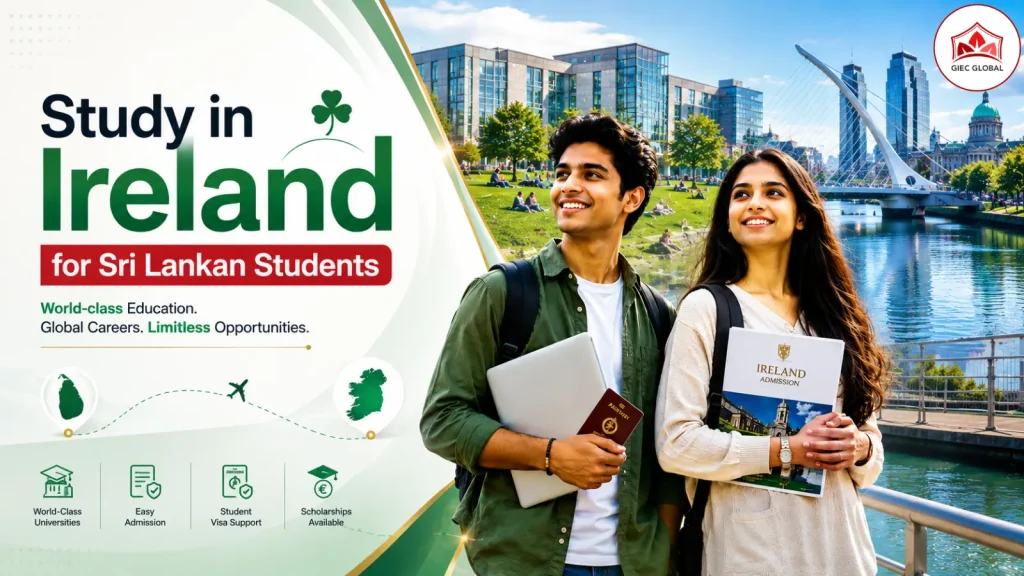
Easy Admission Process to Study in Ireland for Sri Lankan Students
In recent years, Study in Ireland has become one of the top choices for international education among Sri Lankan students. Ireland is known for its globally ranked universities, safe environment, modern education system, and excellent career opportunities. Many students prefer study in ireland because the admission process is simpler compared to several other European countries, making it easier for students to start their international education journey.
One of the biggest reasons why students choose Study in Ireland for Sri Lankan Students is the wide range of courses available in business, IT, healthcare, engineering, and psychology courses ireland. Irish universities focus strongly on practical learning and industry experience, which helps students prepare for international careers. Ireland is also home to many multinational companies, creating strong opportunities for internships and jobs in ireland after graduation.
The ireland student visa process is considered student-friendly when students prepare their documents correctly. Universities in Ireland usually require academic transcripts, proof of English proficiency, a valid passport, financial documents, and an offer letter from a recognized institution. Once admission is confirmed, students can apply for an Ireland study visa or Ireland student visa through the official visa process.
Another major advantage of ireland study abroad opportunities is the availability of part-time and full-time work options. International students are allowed to work part-time during their studies, helping them manage living expenses while gaining international work exposure. Popular cities like Dublin offer excellent employment opportunities, and many students search for jobs in dublin during or after their education.
Students also prefer study in ireland because of the country’s welcoming culture and high-quality lifestyle. Ireland offers strong post-study work opportunities, allowing graduates to stay and build their careers after completing their degrees. This makes Ireland an attractive destination for students who want long-term international career growth.
For students planning to begin their overseas education journey, professional guidance can make the admission and visa process smoother.
Giecglobal Education and Migration- Sri Lanka helps students understand university selection, documentation, admission requirements, and the ireland student visa process step by step. With proper support and planning, Sri Lankan students can successfully achieve their dream to study in ireland and explore global career opportunities.
Admission Requirements for Irish Universities
Getting admission to Irish universities is a simple process when students understand the basic eligibility criteria and prepare their documents correctly. Most universities follow clear guidelines for international applicants and offer support throughout the admission journey.
Academic Qualifications
Students must meet the academic requirements based on the course and university they choose.
For Undergraduate Programs
- Completion of Advanced Level education or equivalent qualification
- Good academic performance in relevant subjects
- Minimum grade requirements depending on the university
For Postgraduate Programs
- A recognized bachelor’s degree
- Relevant academic background for the selected course
- Some programs may require work experience
English Language Requirements
International students must prove their English proficiency through accepted language tests.
Commonly accepted tests include:
- IELTS
- PTE Academic
- TOEFL
- Duolingo English Test (accepted by some universities)
Minimum score requirements may vary according to the institution and course.
Essential Documents Required
Students usually need to prepare the following documents during the application process:
- Academic transcripts and certificates
- Valid passport copy
- English language test results
- Statement of Purpose (SOP)
- Letters of Recommendation
- Updated CV or resume for postgraduate courses
- Portfolio for design or creative programs
Financial Requirements
Students must show proof that they can manage tuition fees and living expenses while studying abroad.
Financial documents may include:
- Bank statements
- Sponsor letters
- Education loan documents
- Proof of income
Course-Specific Requirements
Certain courses may have additional admission conditions.
Examples include:
- Interviews for business or management programs
- Entrance assessments for medical-related courses
- Portfolio submissions for art and design courses
Important Points Students Should Remember
Before applying, students should:
- Check university deadlines carefully
- Ensure all documents are translated into English if required
- Apply early to avoid visa delays
- Review course eligibility criteria in detail
Step-by-Step Admission Process to Study in Ireland
Understanding the admission process makes it easier for students to plan their education journey smoothly. Following each step carefully can improve the chances of receiving a successful university offer.
Step 1: Research Universities and Courses
The first step is selecting the right university and course according to career goals, academic background, and budget.
Students should compare:
- Course curriculum
- Tuition fees
- University rankings
- Location and living expenses
- Internship and career opportunities
Step 2: Check Eligibility Criteria
After shortlisting universities, students should review the admission requirements for their chosen program.
This includes:
- Academic qualifications
- English language scores
- Required documents
- Course-specific conditions
Step 3: Prepare Required Documents
Students must organize all necessary documents before starting the application.
Important documents include:
- Academic certificates
- Passport
- English proficiency test results
- Statement of Purpose
- Recommendation letters
- Financial proof
Keeping scanned copies ready helps speed up the process.
Step 4: Submit University Applications
Applications can usually be submitted through:
- Official university websites
- International application portals
- Authorized education consultants
Students should carefully fill in all information and upload accurate documents.
Step 5: Receive Offer Letter
Once the application is reviewed, universities may provide:
- Conditional offer letter
- Unconditional offer letter
A conditional offer may require students to submit additional documents or final results.
Step 6: Pay Tuition Deposit
To confirm admission, students are generally required to pay an initial tuition fee deposit.
After payment, the university issues:
- Admission confirmation
- Fee receipt
- Required visa documents
Step 7: Apply for Student Visa
Students can then begin the visa application process by preparing:
- Passport
- University offer letter
- Financial proof
- Tuition fee payment receipt
- Medical or insurance documents if required
It is important to apply early to avoid delays.
Step 8: Arrange Accommodation and Travel
After visa approval, students can prepare for departure by:
- Booking accommodation
- Arranging airport pickup if available
- Purchasing flight tickets
- Preparing essential documents for travel
Final Preparation Before Departure
Before leaving, students should:
- Carry all original documents
- Keep digital backups of important papers
- Understand local rules and student guidelines
- Plan their budget and daily expenses properly
Student Visa Process for Sri Lankan Students
Obtaining a student visa is one of the most important steps for students planning to pursue higher education overseas. Understanding the process properly can help avoid delays and improve the chances of approval.
Types of Student Visas
Students usually apply for a long-stay education visa for full-time academic programs.
This visa generally allows students to:
- Stay for the duration of their course
- Work part-time during studies
- Apply for post-study work opportunities if eligible
Documents Required for Visa Application
Students must prepare complete and accurate documentation before applying.
Commonly required documents include:
- Valid passport
- University offer letter
- Tuition fee payment receipt
- Academic certificates and transcripts
- English language test results
- Financial proof
- Passport-size photographs
- Statement explaining study plans
Additional documents may be requested depending on the applicant’s profile.
Financial Proof Requirements
Students must show enough funds to support:
- Tuition fees
- Accommodation expenses
- Daily living costs
Financial proof may include:
- Bank statements
- Fixed deposits
- Sponsor documents
- Education loan approval letters
Clear financial documentation is very important for visa approval.
Step-by-Step Visa Application Process
Step 1: Accept the University Offer
Students must first confirm admission and pay the required tuition deposit.
Step 2: Prepare Visa Documents
Gather all required documents carefully and ensure there are no missing details.
Step 3: Complete the Online Visa Application
Students need to fill out the official visa application form online with accurate information.
Step 4: Submit Supporting Documents
Applicants may need to submit physical copies of documents to the relevant visa office or application center.
Step 5: Attend Biometrics or Additional Verification
Some students may be asked for biometrics or extra verification during processing.
Step 6: Wait for Visa Decision
Visa processing times can vary, so applying early is strongly recommended.
Common Reasons for Visa Delays or Rejections
Students should avoid mistakes such as:
- Incomplete documents
- Insufficient financial proof
- Incorrect information in the application
- Weak explanation of study plans
- Missing tuition fee payment confirmation
Tips for a Smooth Visa Process
- Apply as early as possible
- Double-check all documents before submission
- Maintain clear financial records
- Keep copies of every submitted document
- Follow official guidelines carefully
Proper planning and accurate documentation can make the student visa process much smoother and less stressful.
Is Study in Ireland Good for Tech and Business Courses?
Ireland has become a popular destination for students interested in technology and business-related education. The country offers modern learning environments, industry-focused programs, and strong career opportunities for graduates.
Strong Global Reputation in Technology and Business Education
Many universities are recognized internationally for their academic quality and practical teaching methods.
Students benefit from:
- Industry-relevant curriculum
- Modern campus facilities
- Research-focused learning
- International exposure
Programs are designed to match current global market demands.
Presence of International Companies
Ireland is home to many leading multinational companies across technology, finance, and business sectors.
This creates opportunities for:
- Internships
- Industry projects
- Networking events
- Graduate employment pathways
Students gain practical exposure while completing their education.
Popular Areas of Study
Technology-Related Programs
Students commonly choose fields such as:
- Data Analytics
- Artificial Intelligence
- Cybersecurity
- Software Development
- Cloud Computing
Business-Related Programs
Popular business courses include:
- Marketing
- Finance
- International Business
- Human Resource Management
- Business Analytics
These programs often include practical assignments and real-world case studies.
Career Opportunities After Graduation
Graduates in technology and business fields often benefit from strong employment demand.
Advantages include:
- Access to multinational companies
- Competitive salary opportunities
- International work experience
- Opportunities for long-term career growth
Many employers actively seek skilled graduates with international qualifications.
Practical Learning Approach
Universities focus heavily on practical education instead of only theoretical learning.
Students may experience:
- Group projects
- Internship programs
- Industry workshops
- Business simulations
- Research assignments
This helps students build job-ready skills before graduation.
Benefits for International Students
Technology and business students often prefer Ireland because of:
- English-speaking environment
- Safe and welcoming culture
- Modern infrastructure
- Diverse student communities
- Strong professional networking opportunities
PR Opportunities After Study in Ireland
Many international students choose Study in Ireland because of the long-term career and settlement opportunities available after graduation. Ireland offers strong post-study work options, growing job markets, and pathways that can help students build their future internationally. For many students, studying abroad is not only about education but also about gaining global work experience and exploring future PR opportunities.
Post-Study Work Opportunities
After completing their education, international graduates can apply for post-study work permissions that allow them to stay and work legally in the country.
Benefits of post-study work opportunities include:
- Gaining international work experience
- Building professional networks
- Improving chances of long-term employment
- Exploring permanent residency pathways
This is one of the major reasons why Study in Ireland for Sri Lankan Students is becoming increasingly popular.
High Demand Industries for Graduates
Ireland has a strong economy with growing demand for skilled professionals in several industries.
Popular sectors include:
- Information Technology
- Healthcare
- Finance
- Engineering
- Pharmaceuticals
- Business and Marketing
Students completing psychology courses ireland and other specialized programs may also find opportunities depending on industry demand and qualifications.
Jobs and Career Growth After Graduation
International graduates often search for jobs in ireland after completing their studies. Large cities such as Dublin offer excellent employment opportunities across multiple industries.
Common advantages include:
- Access to multinational companies
- Graduate trainee programs
- Internship-to-employment pathways
- Competitive salaries
Many students specifically look for jobs in dublin because it is a major business and technology hub with strong employment demand.
Pathways Toward Permanent Residency
Graduates who secure skilled employment and meet immigration requirements may eventually become eligible for long-term residency options.
Important factors that can support PR pathways include:
- Skilled work experience
- Stable employment
- Meeting salary requirements
- Legal residency duration
- Compliance with immigration rules
Students planning ireland study abroad opportunities often consider long-term settlement possibilities before choosing their destination.
Importance of Choosing the Right Course
Selecting an industry-focused course can improve employment opportunities after graduation.
Courses with strong career demand often include:
- Technology and IT programs
- Data Analytics
- Healthcare and Nursing
- Finance and Accounting
- Business Management
These programs can improve employability and support future residency goals.
Role of Student Visa and Work Permissions
The Ireland study visa and Ireland student visa allow students to study full-time while also providing limited work rights during education. After graduation, eligible students may apply for post-study work permissions to continue their career journey.
Understanding the ireland student visa process carefully is important for students planning long-term opportunities after completing their education.
How Professional Guidance Can Help
Applying for universities, managing documents, and understanding future residency options can sometimes feel complicated for international students.
Giecglobal Education and Migration- Sri Lanka helps students understand admission procedures, visa requirements, and career-focused education pathways.
With proper planning, the right course selection, and professional support, students can successfully study in ireland, build international careers, and explore future PR opportunities with confidence.
FAQs
1. What are the basic requirements for Sri Lankan students to study in Ireland?
Students generally need academic transcripts, a valid passport, proof of English language proficiency, financial documents, and an offer letter from a recognized university or college.
2. How long does the admission process usually take?
The admission process may take a few weeks to several months depending on the university, course, and document preparation. Applying early helps students avoid delays in admission and visa processing.
3. Is IELTS mandatory for admission to Irish universities?
Many universities accept IELTS as proof of English proficiency, but some institutions may also accept alternatives such as PTE, TOEFL, or Duolingo English Test depending on the course requirements.
4. Can international students work while studying?
Yes, international students are generally allowed to work part-time during academic sessions and full-time during scheduled holidays, helping them gain work experience and manage living expenses.
5. Are tech and business courses good for career opportunities?
Technology and business programs are highly popular because they offer strong career opportunities, practical learning, internships, and access to multinational companies after graduation.
6. Can students get permanent residency after completing their studies?
Students who secure skilled employment and meet immigration requirements may become eligible for long-term residency opportunities after gaining work experience and fulfilling the required conditions.
